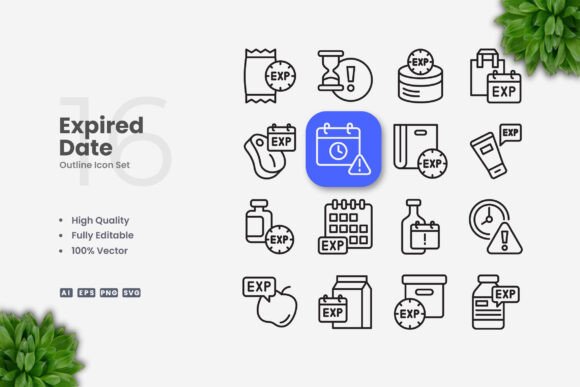
Expired Date Icons Review
As an embroidery designer and product reviewer, I often look for icons that are both functional and visually appealing. Expired Date Icons stand out as a simple yet effective design that can be used in a variety of projects. Whether you're creating custom apparel, personalized gifts, or digital assets, these icons offer a clean and professional look that fits well in many contexts.
First Impressions: A Minimalist Approach
The first thing that catches your eye with Expired Date Icons is their simplicity. The design is clean, with clear lines and a straightforward visual language. This makes it ideal for projects where clarity is key, such as labeling products, creating informational graphics, or adding subtle details to handmade items.
The icon’s layout is balanced, and the detail level is just right—enough to be recognizable but not so intricate that it becomes overwhelming. It has a modern, no-nonsense feel that works well across different mediums, from digital screens to embroidered fabric.
This design feels like it belongs on a tote bag, sweatshirt, or baby onesie. Its minimalism allows it to blend into a wide range of color schemes and fabric types without clashing. It's also versatile enough to work in both casual and more polished settings.
Real-World Embroidery Use Cases
When I tested Expired Date Icons on a custom embroidered tote bag, the result was clean and legible. The icon didn’t require excessive stitch density, which is great for maintaining a smooth finish on fabric. It worked well on cotton and canvas, two common materials for tote bags and other everyday items.
For a sweatshirt embroidery project, the icon looked sharp and professional. It didn’t get lost in the fabric texture, and the stroke weight was appropriate for the size. I found it particularly useful for adding a subtle touch of information to a garment without being too distracting.
In a baby item project, like a onesie or a blanket, the icon’s simplicity made it easy to read and aesthetically pleasing. It didn’t have any sharp edges that could be uncomfortable for a child, and the overall look was soft and friendly.
On a patch or apron, the design held up well, even when stitched in smaller sizes. It maintained its shape and didn’t become distorted, which is important for items that will be worn or used frequently.
Where to Be Careful
While Expired Date Icons are generally reliable, there are some situations where they may not perform as well. On small hoop sizes, the details can become less defined, so it’s best to test the design before committing to a full project.
Textured fabrics, thin materials, or stretchy fabrics might cause the design to lose some definition. In these cases, using a proper stabilizer is essential to keep the stitches from distorting.
On dark fabrics, the contrast might be an issue depending on the thread colors used. Testing the design in black and white mockups can help determine if it will stand out enough for the intended use.
Curved surfaces like caps or hoods can also affect how the icon looks after stitching. It’s worth checking how the design flows around the curve and whether it maintains its integrity.
Impact on Visual Appeal and Professionalism
Expired Date Icons add a sense of professionalism to any project. They’re clean, easy to recognize, and don’t overwhelm the design. This makes them perfect for commercial embroidery projects, where consistency and quality are key.
For small business owners and Etsy sellers, these icons can elevate the look of handmade products and digital downloads. They provide a polished finish that customers appreciate, especially when used in printable mockups or digital product previews.
When used in personalized gifts or custom apparel, the icon adds a touch of thoughtfulness without being too flashy. It helps create a cohesive brand identity and reinforces the idea that the product is well-designed and carefully made.
From a customer perspective, seeing a clear and well-executed icon like this can increase trust in the product. It shows that the seller pays attention to detail, which is especially important for handmade or custom items.
Embroidery Designer Notes
Before using Expired Date Icons in a project, I always recommend testing the design on scrap fabric. This helps you see how the stitches will look on the actual material you plan to use.
Checking thread color contrast is also important. Some colors may not show up well on certain fabrics, so it’s best to experiment with different combinations.
Reviewing the stitch density is another key step. If the design is too dense, it can cause the fabric to pucker or the stitches to look uneven. Adjusting the density as needed can make a big difference in the final result.
Confirming the hoop size is crucial, especially for small or detailed designs. Using the wrong hoop can lead to misalignment or incomplete stitching.
Inspecting small details is also part of the process. Even a minor flaw in the design can affect the overall appearance, so taking the time to check each element is worth it.
Testing the design in black and white mockups helps assess how it will look on different backgrounds. This is especially useful for digital product sellers who need to ensure the icon works in various contexts.
Finally, making sure the design is suitable for both personal and commercial use is important. Always check the licensing terms before selling finished items or digital products.
Final Thoughts
Expired Date Icons are a solid choice for embroidery designers and crafters looking for a clean, practical design. They work well in a variety of projects, from custom apparel to personalized gifts, and add a professional touch without being over-the-top.
Whether you're an Etsy seller, a small shop owner, or a creative entrepreneur, these icons can be a valuable addition to your design library. Just remember to test them thoroughly and consider the specific requirements of your project before using them in a finished product.